How Artificial Intelligence Is Redefining the Future of Anesthesia Practice
Artificial intelligence is transforming anesthesia practice, from automated drug titration to closed-loop physiologic control. Explore what AI means for CRNAs, SRNAs, anesthesia education, and the future of clinical expertise.
We’re Still Not Thinking Big Enough About AI in Anesthesia
Artificial intelligence is already influencing many areas of healthcare, but anesthesia is approaching a more fundamental shift than most conversations acknowledge. Much of today’s discussion centers on AI for documentation, predictive analytics, or decision support. While helpful, these applications only hint at what’s coming.
The more transformative vision is an AI-driven anesthesia environment where clinicians no longer spend the majority of their cognitive bandwidth manually chasing physiologic variables. Instead, the anesthesia professional defines the clinical goals, and the system continuously adapts therapy in real time to stay within those targets. Blood pressure, anesthetic depth, and neuromuscular blockade are no longer adjusted reactively, but managed proactively through continuous feedback and control.
This concept represents a meaningful shift in how anesthesia care is delivered, and it is far closer to reality than many realize.
Closed-Loop Anesthesia: The Building Blocks Are Already Here
A closed-loop anesthesia system measures a physiologic signal, compares it to a clinician-defined target, and automatically adjusts therapy to minimize deviation.
Over the past two decades, closed-loop control has been studied across multiple domains of anesthesia care, including:
Depth of anesthesia using EEG-derived indices (e.g., BIS)
Blood pressure control using arterial waveform analysis
Neuromuscular blockade using quantitative monitoring
Goal-directed fluid therapy guided by dynamic indices such as SVV
Across these domains, closed-loop systems consistently demonstrate tighter control, reduced variability, and improved time-in-target compared to manual titration, while still requiring clinician oversight.
Key point: What’s missing is not technology. What’s missing is integration.
The Next Leap: Integrated AI Anesthesia Platforms
The next evolution is not better individual tools but orchestration.
Imagine a single AI platform where the clinician defines:
Hemodynamic targets (MAP, SBP, SVV)
Depth-of-anesthesia goals (BIS or EEG indices)
Neuromuscular blockade parameters
Ventilation and oxygenation ranges
Analgesia goals informed by cortical and physiologic signals
The system continuously integrates data from:
Hemodynamics
EEG and anesthetic depth
Neuromuscular monitoring
Ventilation mechanics and gas exchange
Analgesia and nociception indicators
As surgery evolves, through stimulation, blood loss, positioning, or physiologic shifts, the AI adapts automatically. This marks a shift from manual control to supervisory control.
What This Means for CRNAs, SRNAs, and Nurse Educators
As anesthesia becomes more automated, expertise does not diminish, it changes form. The value of the anesthesia professional increasingly lies in their ability to understand physiology deeply, define safe and evidence-based targets, and recognize when automated systems are no longer aligned with the clinical reality unfolding in front of them.
For CRNAs and SRNAs, this means developing comfort with complexity rather than resisting it. For educators, it raises important questions about how training programs prepare learners not just to titrate drugs manually, but to supervise intelligent systems responsibly.
Why AI Still Depends on Human Judgment
Despite rapid advances, AI cannot replace the uniquely human elements of anesthesia care. Automated systems cannot secure a difficult airway, place invasive lines, perform regional anesthesia, or manage unexpected surgical crises. More importantly, AI lacks the contextual awareness required to navigate ethical considerations, subtle clinical cues, and evolving intraoperative priorities.
Rather than diminishing the role of anesthesia professionals, AI amplifies it. As automation increases, the clinician’s responsibility shifts toward ensuring systems remain aligned with patient physiology and clinical intent. In this sense, anesthesia professionals are becoming systems managers of human physiology, a role that demands more insight, not less.
Are Anesthesia Education and Regulation Keeping Pace With AI?
This evolution raises an uncomfortable but necessary question: are anesthesia education programs, regulatory frameworks, and professional identities evolving quickly enough to match the reality of semi-autonomous care environments?
Many clinicians are still trained primarily for a world of manual control, even as clinical environments increasingly rely on automation and algorithmic assistance. Without intentional adaptation, there is a risk that future providers will inherit powerful tools without sufficient preparation to supervise them safely and confidently.
This is where ongoing education, thoughtful curriculum design, and professional dialogue become essential, and where platforms like Ollivate play a critical role in bridging traditional training with emerging clinical realities.
Where Ollivate Fits Into the Future of Anesthesia
Ollivate’s approach emphasizes what technology cannot replace: deep physiologic understanding, clinical reasoning under uncertainty, and the ability to integrate multiple data streams into coherent decision-making. As anesthesia care evolves, these skills become even more valuable.
By reinforcing fundamentals while engaging with the realities of modern practice, Ollivate helps prepare anesthesia professionals not just to keep up with change, but to lead through it.
Final Takeaway: AI Makes Human Expertise More Valuable
Artificial intelligence does not make anesthesia less human. It makes human judgment more consequential.
The clinicians who thrive in the future of anesthesia will be those who can define safe boundaries for intelligent systems, recognize when automation falls short, and intervene decisively when patients need them most. The future of anesthesia is not about surrendering control, rather, it is about mastering a more complex and demanding form of it.
Invite Josh to Speak
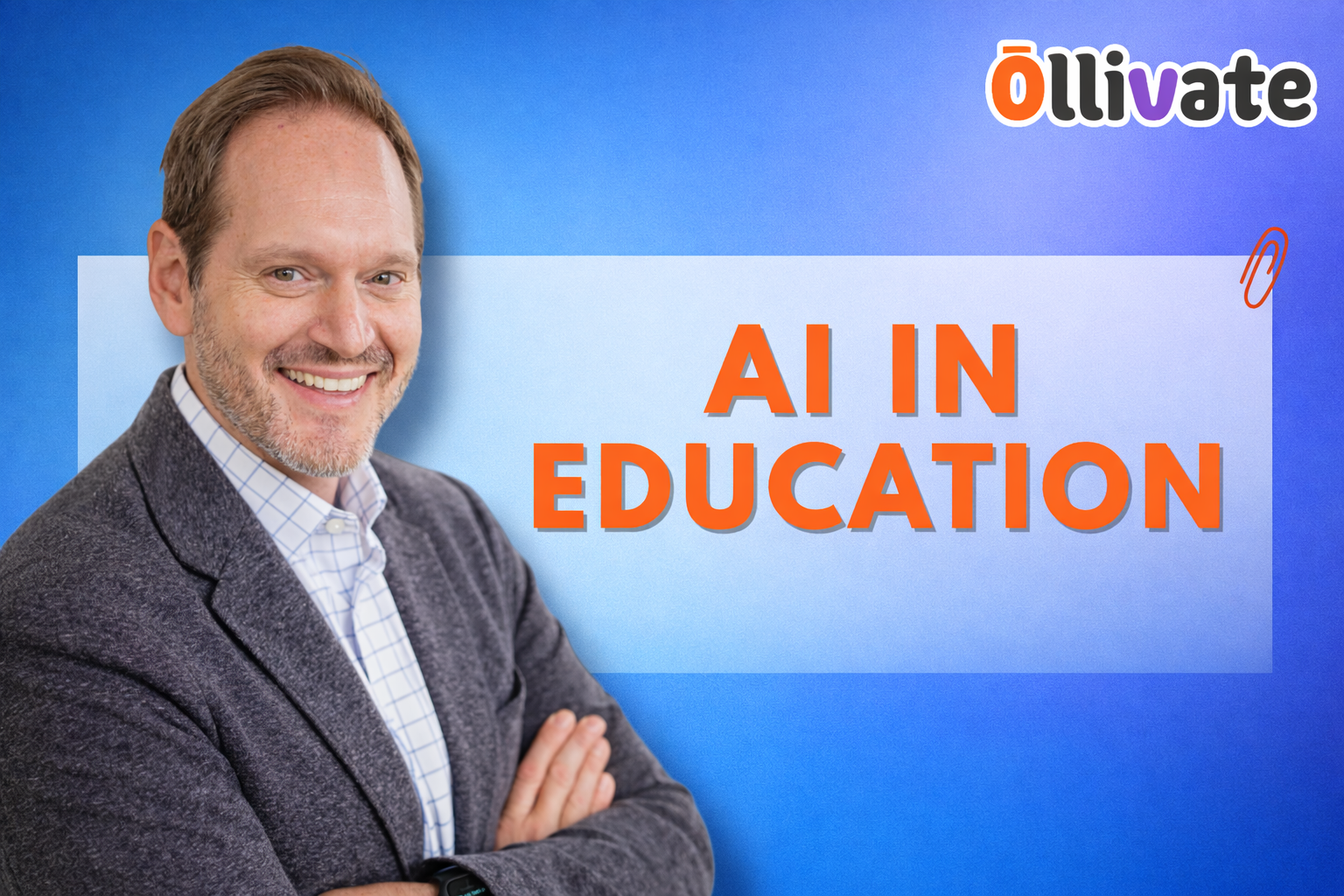
Artificial intelligence is going to reshape anesthesia practice in ways most people still aren’t fully thinking about. I enjoy speaking with anesthesia programs, conferences, and clinical teams about what AI actually means for CRNAs, SRNAs, and the future of our profession.
If you'd like me to speak at your event or program, I'd love to join the conversation. Email us at hello@ollivate.com.