A smarter way to prep for the CCRN and CRNA school
Advance your critical care career with a gamified app built around the cognitive science of how the brain actually learns. Study the way nurses actually think.

Pass the CCRN or Prepare for a CRNA Career!
Ollivate is built to help Critical Care RNs achieve their next major milestones in their healthcare careers.

I want to pass the CCRN
Included with Olli Scholar ($199/yr)
Drill critical care concepts and build real-world bedside confidence. Move beyond rote memorization with case-based learning that teaches you how to think through patient deterioration and prioritize interventions.
What's Included:
3,000+ critical-care practice questions.
Full-length CCRN® practice exams.
Detailed rationales for clinical application.
I’m prepping for CRNA School
Included with Olli Professional ($299/yr)
Bridge the gap between bedside nursing and graduate-level anesthesia. Master advanced concepts before your first day of class and build the foundational knowledge to thrive in a rigorous anesthesia training program.
What's Included:
The Advanced Nurse Anesthesia Prep (ANAP) Microcredential
27.20 ANCC-approved contact hours
Everything included in the CCRN® Prep track.

Game Your Brain™
Gamified Studying for Peak Performance and Retention
Ollivate applies science-backed learning methods—including active recall, spaced repetition, and interleaving—to build a more effective, engaging platform for foundational study, board prep, and earning CE credits.
Study or Earn CE On Your Time
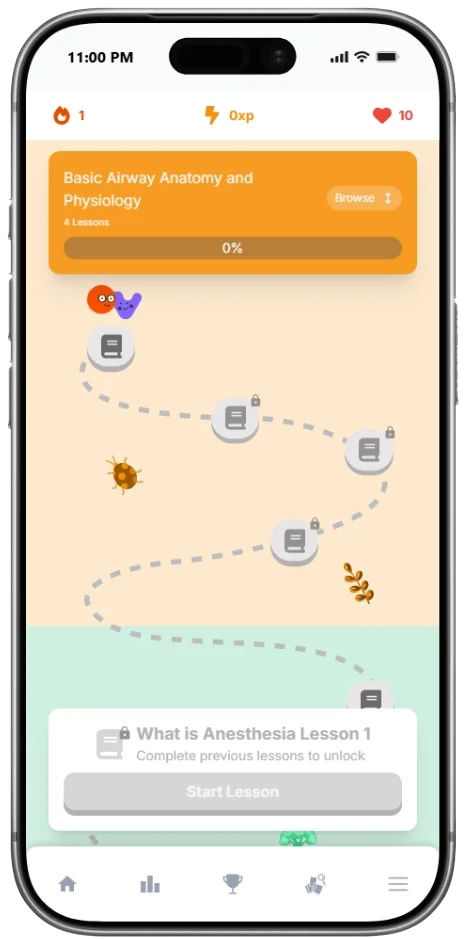
Your schedule rarely allows long study blocks or CE sessions. Ollivate makes it easy to study consistently, even when time is limited. Review questions or concepts in short bursts each day.
Retain Knowledge For When It Counts
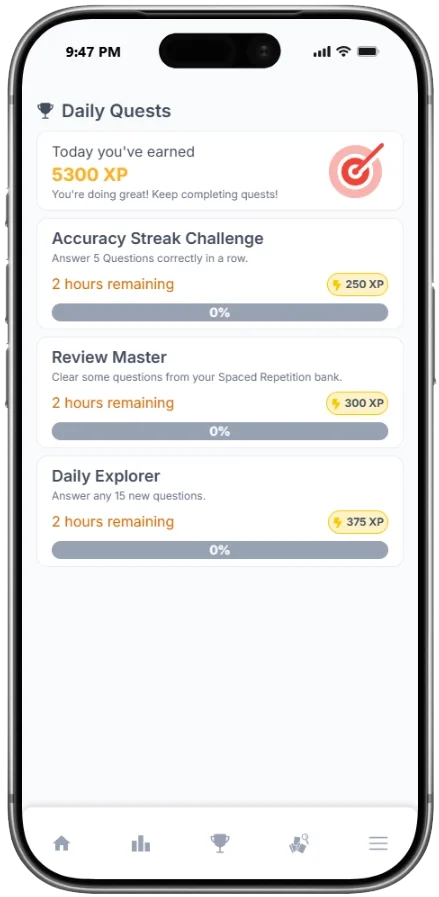
Daily challenges ensure vital concepts stay in your active memory, keeping you sharp for the CCRN or helping you master anesthesia concepts.
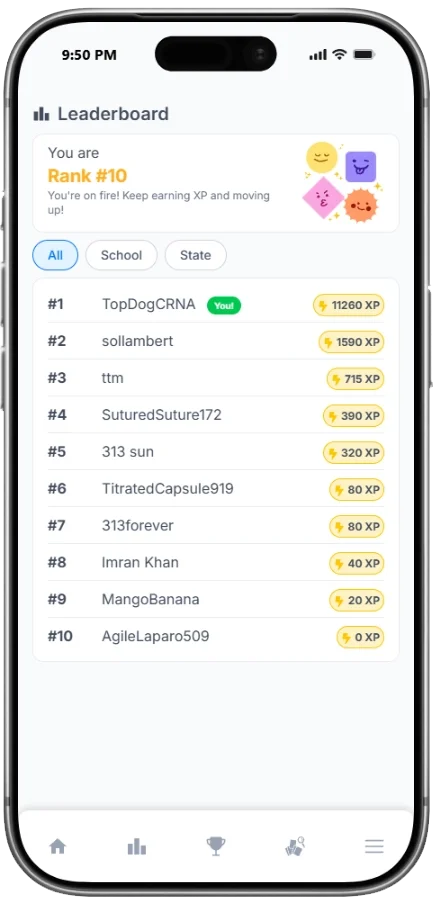
Connect and Compete With Your Peers
Stay engaged with a healthy dose of fun. Climb the national leaderboards, earn achievements, and see how you stack up against colleagues from your cohort and programs across the US.
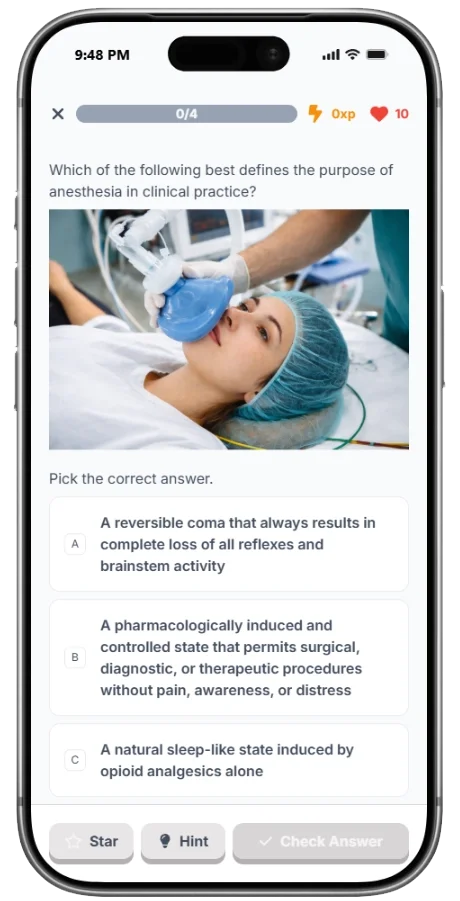
Focus and Target Your Daily Learning
Focus your time on what matters most. RNs can build custom CCRN quizzes or select from several pre-made options.
CCRN Prep Course
The CCRN Prep course prepares registered nurses for the CCRN critical care certification with a high-yield, clinically focused course built around real-world practice.
The program covers cardiovascular, respiratory, neurological, and multisystem care, with integrated case-based learning and exam-style questions designed to build the clinical reasoning a CCRN needs on the unit — not just the recall required to pass the test. The course includes 3,000+ critical-care questions.
3,000+ exam-style practice questions
Detailed rationales
8 major critical-care topic areas
Case-based clinical reasoning practice
About the Curriculum
Content coverage reflects common CCRN®-tested critical-care concepts and is designed to support exam preparation, clinical reasoning, and bedside confidence. Ollivate is a supplemental study tool and is not a replacement for formal critical-care training, employer education, AACN eligibility requirements, or official certification exam materials.
CCRN Review FAQs
-
Ollivate’s CCRN® review is built around clinical reasoning, not passive memorization. Instead of forcing nurses through disconnected facts, the course helps learners practice how critical-care concepts show up in real ICU decisions, patient deterioration, and exam-style scenarios.
-
CCRN® prep is included with Olli Scholar, the plan built for exam preparation. RNs preparing for the CCRN® should choose Olli Scholar. RNs preparing for the CRNA-school path should explore ANAP through Olli Professional.
-
Yes, users can start with free access to explore Ollivate and begin building a study habit. Upgrading to Olli Scholar unlocks the full CCRN® review experience, including expanded practice access and exam-prep features.
-
No. CCRN® prep is for RNs preparing for the critical-care certification exam. ANAP is for RNs preparing for the CRNA-school pathway and includes ANCC-approved CE and the ANAP microcredential.
-
The course covers major critical-care concepts commonly tested on the CCRN® exam, including cardiovascular, respiratory, neurologic, endocrine, renal, gastrointestinal, hematologic, and multisystem care.
ANAP Microcredential Bridge the Gap Between RN and SRNA
The ANAP microcredential introduces registered nurses to core anesthesia concepts encountered in CRNA training. Content is organized by clinical domain to help RNs build familiarity with anesthesia language, frameworks, and clinical context before entering a formal CRNA program.
Earn the ANAP Microcredential + 27 ANCC-Approved CE Credits
ANAP is an optional educational microcredential designed to support registered nurses preparing for advanced anesthesia training. It is not required for CRNA program admission, does not guarantee acceptance, and is not replacement for formal CRNA coursework or clinical education.
-
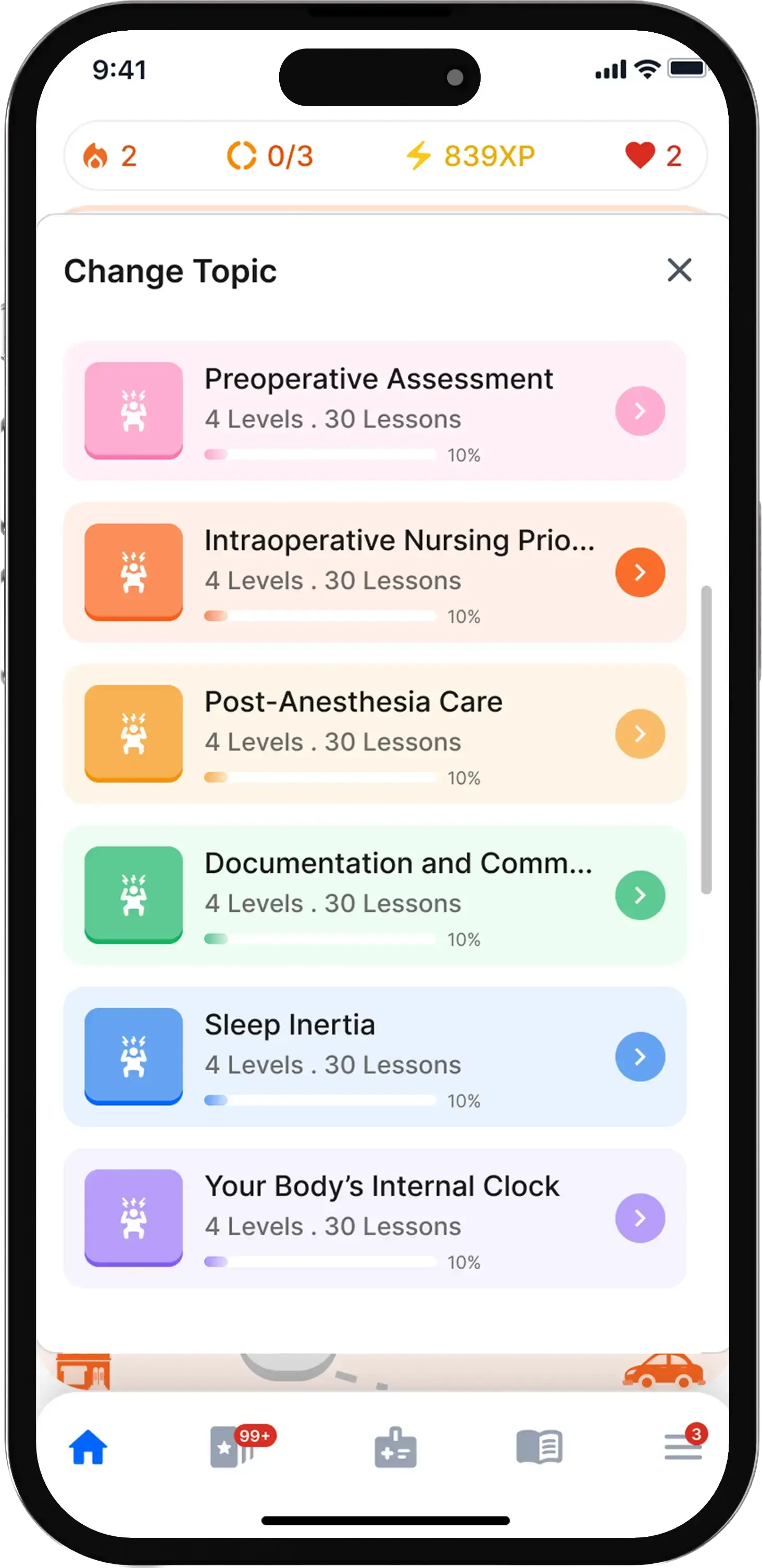
Review a high-level introduction to anesthesia care and how it supports patient safety, comfort, and perioperative outcomes.
Topics include:
What anesthesia is and how it is used in patient care
The four primary types of anesthesia
Roles of the anesthesia care team
And more
-
Learn core airway concepts essential to anesthesia practice, with emphasis on anatomy, assessment, and foundational airway techniques.
Topics include:
Basic airway anatomy and physiology
Airway assessment and predictors of difficulty
Common airway equipment and devices
And more
-
Build foundational understanding of cardiovascular physiology and monitoring concepts relevant to anesthesia and perioperative care.
Topics include:
Basic cardiac anatomy and physiology
Blood pressure determinants and monitoring
Introductory EKG concepts and rhythm recognition
And more
-
Review essential pharmacology principles used in anesthesia, focusing on how anesthetic drugs work and are applied safely.
Topics include:
Pharmacokinetics and pharmacodynamics
Basic receptor theory and drug interactions
Major classes of anesthesia-related medications
And more
-
Gain familiarity with anesthesia equipment and monitoring systems that support safe anesthetic delivery.
Topics include:
Core components of the anesthesia machine
Gas delivery systems and vaporizers
Essential anesthesia monitors and alarms
And more
-
Review key priorities across the perioperative continuum, from preoperative assessment through post-anesthesia recovery.
Topics include:
Preoperative assessment and risk classification
Intraoperative safety priorities and positioning
Post-anesthesia recovery and discharge considerations
And more
-
Explore how patient-specific factors influence anesthesia care and require tailored clinical considerations.
Topics include:
Pediatric anesthesia considerations
Geriatric physiology and cognitive risk
Obesity-related airway and dosing challenges
And more
-
Learn to recognize common anesthesia-related emergencies and understand initial response priorities.
Topics include:
Malignant hyperthermia recognition and response
Anaphylaxis and allergic reactions
Common perioperative hemodynamic disturbances
And more
-
Gain an overview of the nurse anesthesia career pathway, from preparation through advanced practice roles.
Topics include:
CRNA prerequisites and educational pathways
What to expect in nurse anesthesia school
Scope of practice and professional responsibilities
And more
ANAP FAQs
-
No. ANAP is designed for registered nurses at different stages, including those preparing to apply and those recently accepted. It is an optional, preparatory microcredential and is not required for CRNA program admission
-
ANAP does not guarantee CRNA program admission. It is designed to help RNs build familiarity with anesthesia concepts and feel more prepared for interviews and early coursework
-
Most users complete the credential in 20-25 hours, but it’s entirely self-paced. It’s designed for you to do a little bit each day- your progress is saved!
-
Create a free Ollivate account and choose the RN/ANAP pathway inside the app. You can start exploring Ollivate for free, then upgrade to Olli Professional to unlock ANAP’s full credentialed experience, including ANCC-approved CE credits, certificates, and the ANAP microcredential.
Pick the plan that fits.
Choose Olli Scholar for CCRN® Review or Olli Professional for the ANAP.
Built by healthcare professionals who understand your reality.
Founded by husband-and-wife team Dr. Joshua Olson, DNP, CRNA, and April Olson, and built with technology leadership from Tyler Mays, Ollivate combines clinical expertise, learning strategy, and gamified product design to make nursing education more engaging, practical, and easier to fit into real life.


Try Ollivate for Free


What Ollivate Users are Saying
.
What Ollivate Users are Saying .
-
![“”]()
“I learned about this program by listening to the podcast 'Beyond the Mask'. I am a CRNA in practice for almost 40 years and I love this program. I recommend it to all of my CRNA colleagues and grad students. Please thank Joshua Olson for creating such a wonderful learning tool. Who said you cannot teach an old dog new tricks?”
John, CRNA
-
![]()
“Using Ollivate as an aspiring CRNA has been such a wonderful experience. I have been able to learn so much about anesthesia prior to applying. It’s also rewarding to know that I can start to learn things that will be valuable as a student during the waiting process. The way the app is set up truly is fun and once you start you will want to keep working through different lessons. I would strongly recommend it!”
Kendall, RN
-
![]()
“I am very excited to continue to use the app. It has been so educational so far and i believe will be a great study partner in CRNA school. Thank you again. ”
Sophie, RN
-
![“”]()
“As an RRNA in my final semester of school, I’m super busy with clinical and studying for boards. That’s when Ollivate helps me out! Ollivate makes it so easy to fit in study time around class and clinical, and it’s fun- which makes you actually want to use it.”
Hannah, RRNA
-
![]()
“Hello!! 1st: I am LOVINGGGG the Ollivate app! It has everything I need and more in terms of content and "fun" - great balance of structure and fun! I have been doing questions almost every single day and it is helping me to solidify all of the content learned in class.”
Chantel, RRNA
-
![]()
“Very Cool. Did the first CE just now. Good job on this. ”
Eric, CRNA
-
![]()
“I think Ollivate has been a great tool to use while I’m studying for tests and the SEE exam! I love the rationales and the spaced repetition that’s built into the questions as well.”
Montse, SRNA